finance
Global Pressures, Local Prices: How the World Economy Is Landing on Geelong's Small Business Owners
From AI land grabs to cooling property markets and a food-waste revolution, the forces reshaping global commerce are hitting Geelong traders right now, and the savvy ones are already adjusting.
How we reported this
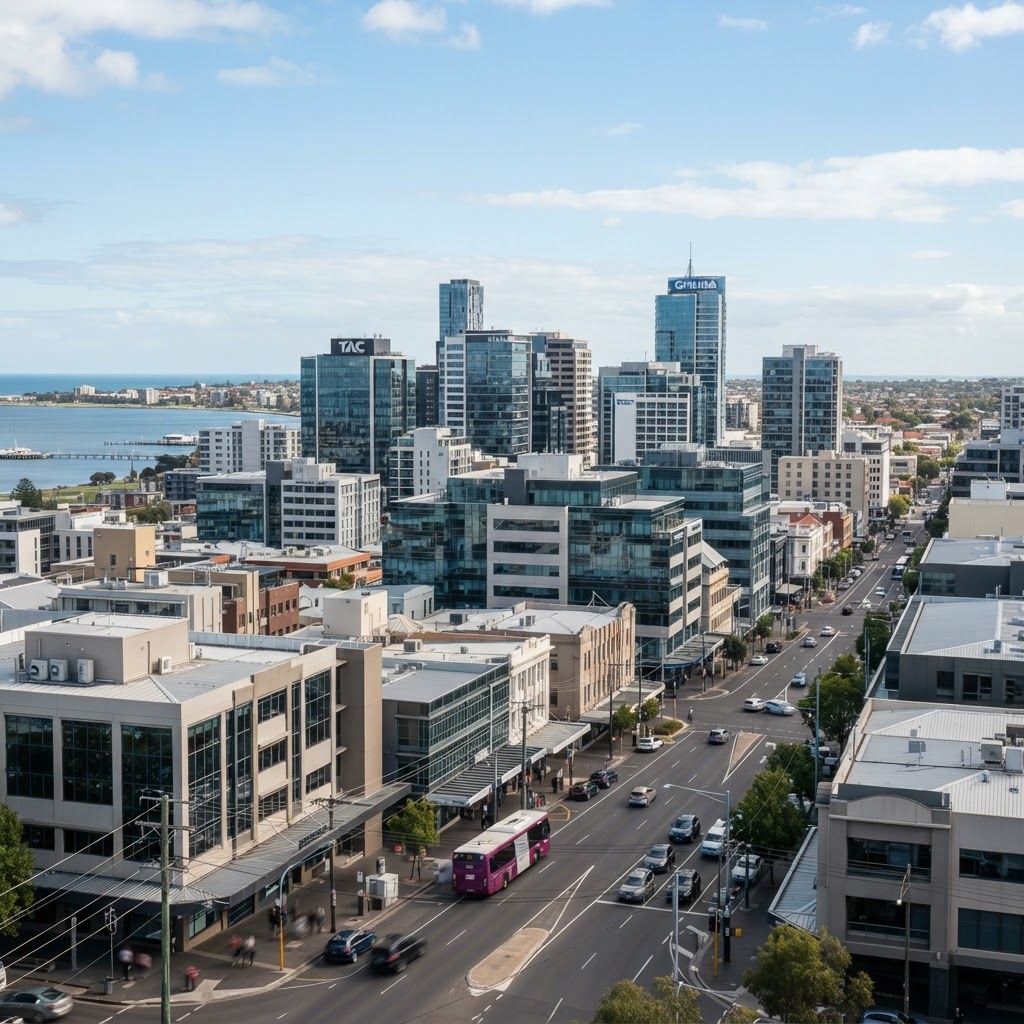
The number that keeps coming up in conversations with Geelong small business owners this week is 18 per cent. That's the rough increase in commercial lease inquiries on Moorabool Street and the Pakington Street strip in Geelong West that local property managers are flagging for the second half of 2026, driven partly by the same industrial land squeeze that economists nationally are blaming on the AI data-centre construction boom. When global tech giants fight over every available hectare of industrial zoning, freight and logistics costs climb, and it's the woman running a wholesale kitchenware supply business out of Norlane who notices it first on her shipping invoices.
This matters right now because several macro forces have converged in the same quarter. Australia's property market is softening, auction clearance rates in greater Geelong fell to 58 per cent in the June 2026 quarter, down from 67 per cent a year earlier, but commercial rents in high-foot-traffic precincts are not following residential prices downward. Meanwhile, the recycling and circular-economy sector is generating genuine new revenue streams, and the hospitality-to-farm food-waste loop is turning restaurant scraps into a commodity that some Bellarine Peninsula producers are already pricing into their cost models.
The Land and Cost Crunch Hitting Geelong's Entrepreneurs
The Geelong Small Business Centre, which operates out of Ryrie Street and supported more than 1,400 client businesses in the 2025-26 financial year, has been fielding a surge of enquiries about lease negotiation since April. The pressure point is industrial and logistics space. Data-centre developers, most of them working on projects nowhere near Geelong, are still distorting the national market for steel, electrical contractors and zoned land, and those distortions travel downstream. A fabrication business in Corio that quotes on a fit-out today is paying roughly 14 per cent more for structural steel than it did in July 2024, according to figures circulating through the Geelong Manufacturing Council.
On Pakington Street, the picture is more mixed but no less pressured. Foot traffic is holding, the strip logged its strongest winter Saturday numbers since 2022 during the last weekend of June, but margin compression is real. A specialty food retailer operating between the Pako Festa precinct and Ryrie Street said her freight bill from a Melbourne distributor jumped $340 a month between January and June this year, a direct consequence of logistics firms passing on higher warehousing costs.
The Circular Economy Opportunity Some Are Already Grabbing
Not every global trend is a headache. The food-scrap-to-compost pipeline that is gaining traction among Victorian farmers represents a tangible revenue and cost-saving opportunity for Geelong's hospitality sector. The Geelong Sustainability office, part of City of Greater Geelong's operations based on Gheringhap Street, confirmed this week that its FOGO (food organics and garden organics) commercial collection trial, which enrolled 47 CBD food businesses in its first phase beginning March 2026, is on track to expand to 120 participants by October. Businesses in the trial are reporting organic waste disposal cost reductions of between $80 and $220 per month, depending on volume.
For a cafe or small restaurant operating on margins of 5 to 8 per cent, which is typical along the Waterfront precinct near Eastern Beach, that saving is not trivial. Some Bellarine Peninsula producers are already negotiating direct arrangements with Queenscliff and Barwon Heads restaurants to collect scraps, process them through composting operations, and supply back organic inputs at below-retail rates. It is early, but the model is working in at least a dozen documented cases.
The practical takeaway for Geelong entrepreneurs is straightforward: global conditions are not abstract. Lock in freight and logistics contracts before spring, when data-centre construction activity historically peaks and puts further pressure on transport networks. Engage with the FOGO trial expansion if you run a food business, the October deadline for expressions of interest through the City of Greater Geelong is the relevant date. And if you are negotiating a commercial lease anywhere between the CBD and Belmont, get independent advice. The Geelong Small Business Centre offers free lease review sessions every Tuesday morning. Use them.
This article is general information only and is not personal financial or investment advice. Consider your own circumstances and seek licensed professional advice before making financial decisions.