finance
Geelong's traders feel the global crosscurrents as local shares edge higher
From Pakington Street boutiques to waterfront hospitality, Geelong's small businesses are navigating a day of mixed global signals even as Australian shares post a quiet gain.
How we reported this
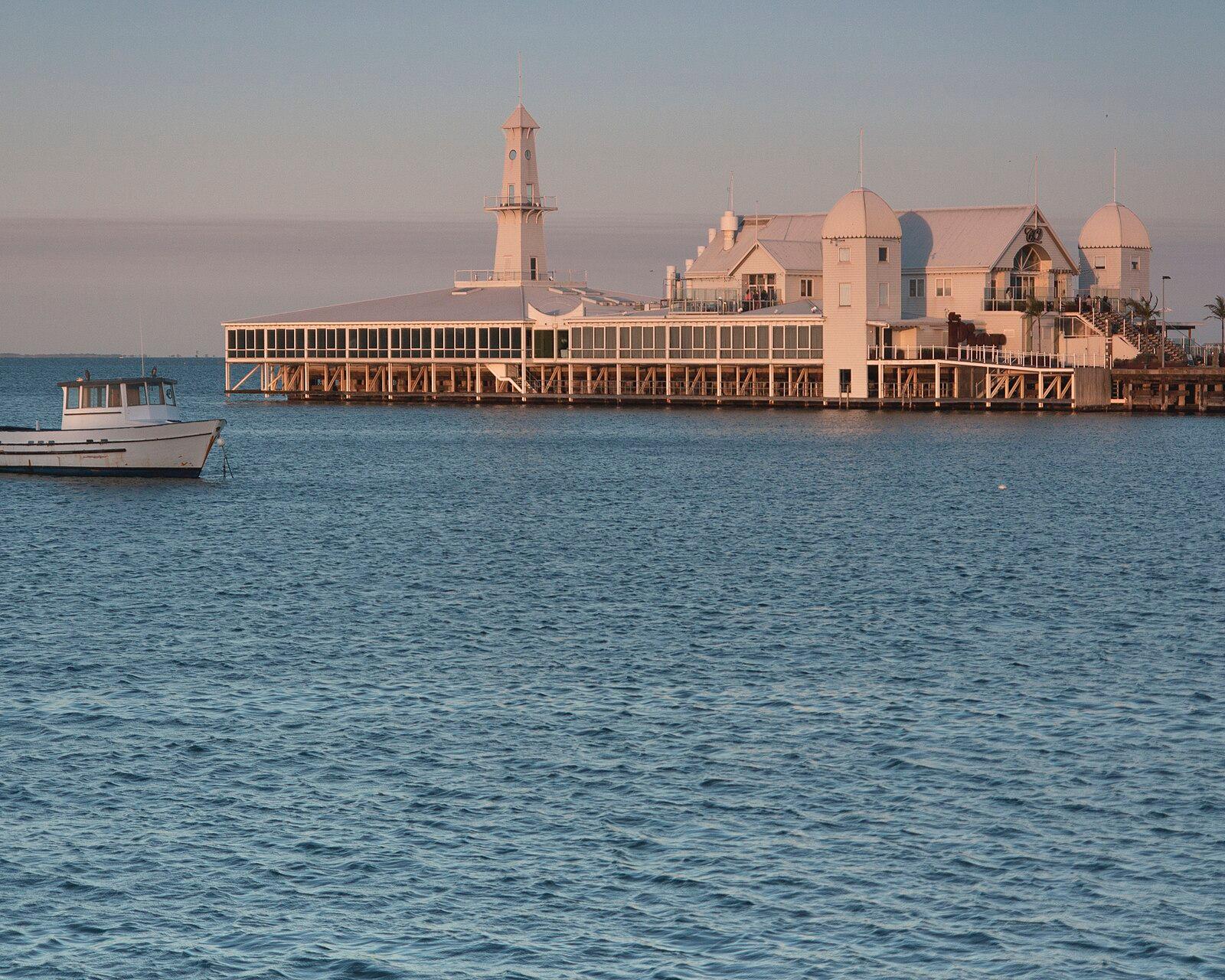
Walk through Geelong's central trading strips on a day like this and the mood is measured rather than jubilant. The All Ordinaries climbed 0.4 per cent to 9,036.9 and the ASX 200 added 0.37 per cent to 8,840.7, numbers that look reassuring on paper but mask a more complicated picture for the small and mid-sized operators who form the backbone of this city's economy. For a retailer ordering imported stock, a cafe owner watching energy bills, or a manufacturer with exposure to commodity input costs, the day's global moves matter in ways that a single index figure rarely captures.
The most consequential read for Geelong's import-reliant businesses comes from commodity markets, where the pullback in energy prices offers some relief but the slide in precious metals tells a more cautious story. Brent crude eased 0.74 per cent to US$84.32 a barrel and West Texas Intermediate fell a steeper 1.48 per cent to US$78.42. Lower crude benchmarks have a delayed but real effect on local transport and logistics costs, which flow through to every business that relies on deliveries, and in a city the size of Geelong, that is most of them. Natural gas slipped 1.06 per cent to US$2.893, a move that will interest the region's light industrial operators who have been managing elevated energy overheads for the better part of two years.
Gold's retreat deserves attention beyond the headlines. The metal fell 1.6 per cent to US$3,979.30 an ounce, pulling back from levels that had been signalling persistent global anxiety. Silver dropped a sharper 2.39 per cent to US$55.745 and platinum eased 0.17 per cent to US$1,628.70. For Geelong residents with superannuation funds that carry precious metals exposure as a defensive hedge, a single session's decline is not cause for alarm, but the breadth of the sell-off across safe-haven assets suggests some rotation is underway in global portfolios. Copper, which trades as a proxy for industrial confidence, slipped just 0.16 per cent to US$6.283, a relatively contained move that offers faint encouragement for the construction and manufacturing sectors this city has long relied upon.
Wall Street splits, Asia steadies, Europe wobbles
Overnight on Wall Street, the picture was divided. The Dow Jones edged up 0.08 per cent to 52,549.51, providing a degree of stability, but the S&P 500 dipped 0.12 per cent to 7,534.62 and the Nasdaq fell a more notable 0.83 per cent to 25,889.145 as technology stocks came under pressure. That Nasdaq softness is worth watching for Geelong investors with growth-oriented superannuation options, given how heavily global tech weightings now feature in diversified funds. Across Asia, the Hang Seng was the standout performer, surging 2.74 per cent to 25,008.6, while Singapore's Straits Times Index added 0.8 per cent to 5,539.38, offering some counterbalance to the Nikkei 225's sharp retreat of 2.79 per cent to 66,835.54. European markets were mixed, with the FTSE 100 gaining 0.41 per cent to 10,572.24, the CAC 40 barely changed at a fall of 0.05 per cent to 8,377.86, and the DAX sliding 0.92 per cent to 24,915.49.
In digital assets, the session was broadly softer. Bitcoin fell 0.76 per cent to US$64,217.54, Ethereum dropped 2.24 per cent to US$1,874.10, and Solana lost 1.96 per cent to US$75.75. XRP fell 1.44 per cent to US$1.0967, Dogecoin eased 1.26 per cent to US$0.07311, and BNB declined 0.85 per cent to US$575.20. The uniform direction across the crypto complex points to a risk-off undercurrent that sits somewhat at odds with the steadiness in Australian equities, and serves as a reminder that digital assets continue to march to a different drum than the local bourse.
For Geelong households and business owners trying to make sense of it all, the practical takeaway is one of cautious stability rather than alarm. Australian shares are holding their ground, commodity cost pressures are easing at the margin, and the superannuation balances that underpin retirement plans for much of this city's working population are broadly supported by the local market's modest gain. Single-session moves across any asset class rarely demand an immediate response, and the diversification built into most managed funds exists precisely to absorb days when Wall Street and Tokyo pull in different directions from Sydney and Melbourne.
This article is general information only and does not constitute personal financial or investment advice. Readers should consider their own circumstances and seek advice from a licensed financial professional before making any investment decisions.