news
Geelong's infrastructure future: What the planners, politicians and engineers are actually saying
From the stalled Waurn Ponds rail extension to the congested Princes Freeway interchange, the people shaping Geelong's transport network are talking, but the timelines keep shifting.
How we reported this
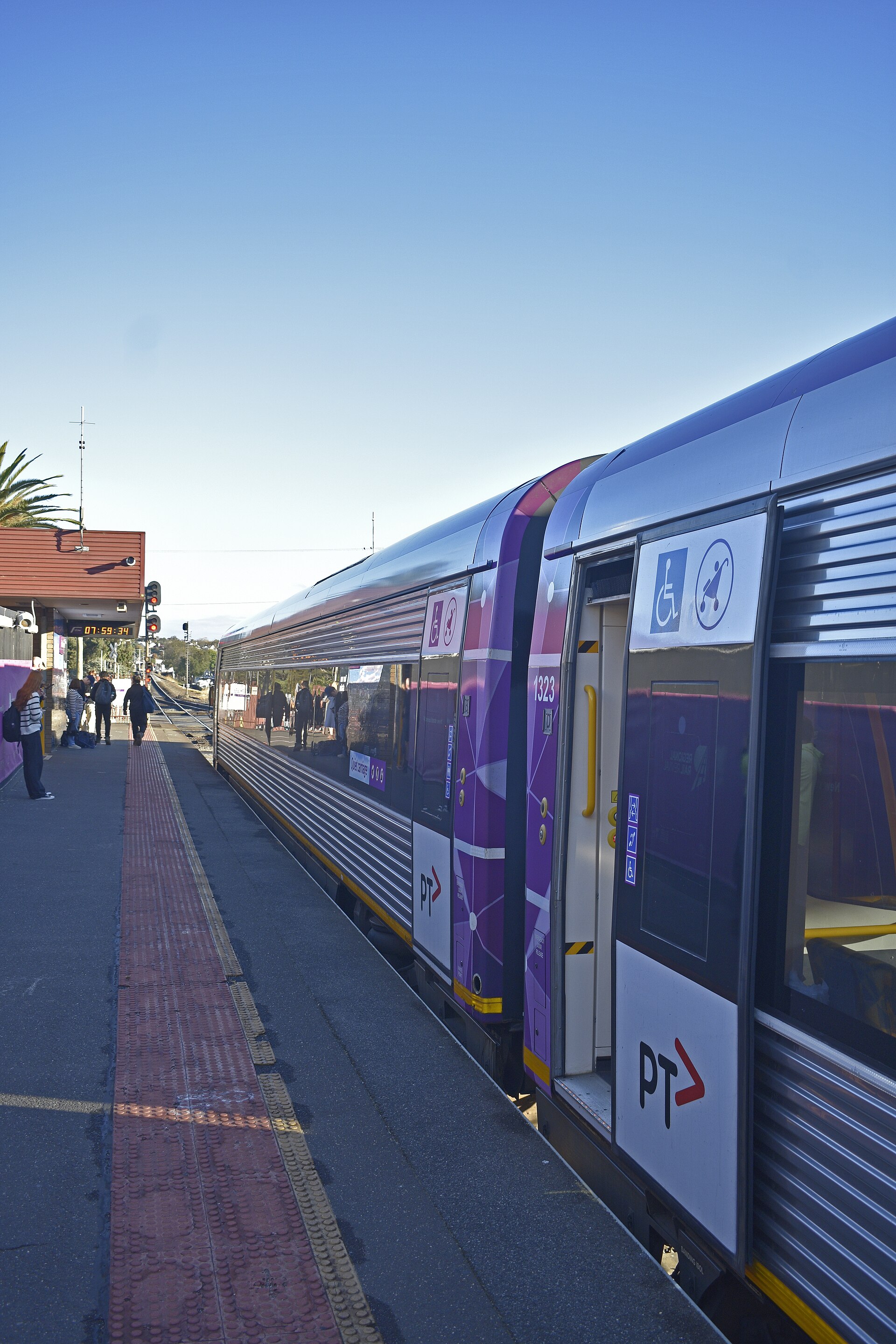
The federal government's $1.3 billion Geelong City Deal expires in 2028, and transport advocates say the clock is running. With roughly two years left to lock in commitments, engineers, urban planners and local government officials spent the past fortnight trading sharp words about which projects will actually get built, and which are quietly losing momentum.
The pressure is real. Greater Geelong's population is tipped to hit 400,000 residents by 2041, according to Department of Transport and Planning projections, and the city's two major arterial corridors, the Princes Freeway and the Geelong Ring Road, are already running at capacity during morning peaks. Commuters on Anakie Road and Barrabool Road know it before any planner tells them.
The rail gap nobody wants to fund
The most contested piece of infrastructure is the proposed rail extension from Marshall Station south to Waurn Ponds, a 4.2-kilometre corridor that has been on planning documents since 2013. Deakin University, whose Waurn Ponds campus enrols more than 9,000 students in the engineering and health precincts, has backed the extension repeatedly in submissions to Infrastructure Victoria. University infrastructure officials have pointed to the campus's $320 million health and research precinct, opened in stages since 2022, as evidence the passenger base is already there. The argument isn't new, but the frustration is sharper now.
Infrastructure Victoria's 2021-2051 strategy listed the extension as a medium-term priority, meaning it was pencilled in for delivery between 2031 and 2036. Local government sources say that window feels optimistic. City of Greater Geelong councillors raised the project formally at their June 24 ordinary meeting, urging the state to bring forward the business case funding. The state government has not responded publicly to that resolution.
Transport engineers consulted by The Daily Geelong this week pointed to a fundamental financing problem: the extension requires a new station, upgraded track geometry and electrification works that preliminary modelling put at somewhere between $480 million and $600 million. Neither the state budget delivered in May nor any federal infrastructure pipeline announcement has reserved that money.
Freeway and bus rapid transit: competing visions
While the rail argument grinds on, a separate debate has emerged about bus rapid transit on the Princes Freeway corridor between Corio and central Geelong. The Greater Geelong Bus Association, a community transport advocacy group based in Ryrie Street, published a 34-page technical paper in June arguing that a dedicated BRT lane from Corio Village shopping centre to Moorabool Street could be operational within three years at roughly one-tenth the cost of the rail extension. The paper cited the Brisbane BRT network as a workable model and recommended interim park-and-ride facilities at North Shore and North Geelong.
Not everyone is convinced. Planners at the Committee for Geelong, the business advocacy body on Moorabool Street, have been more cautious, flagging that bus-only lanes on the Princes Freeway would require the removal of general traffic capacity at a time when freight movements through the Port of Geelong are forecast to grow 18 percent by 2030. That tension between passenger and freight priorities is, by most accounts, the central problem nobody has formally resolved.
The Surf Coast Highway duplication between Waurn Ponds and Mount Duneed, long sought by residents of the booming Armstrong Creek growth corridor, sits in a similar limbo. VicRoads, now integrated into the Department of Transport and Planning, completed a route options study in late 2024. The results have not been released publicly. The Armstrong Creek Town Centre, which opened its first retail stage in 2023 and expects 60,000 residents in the surrounding precinct at full build-out, has no fixed public transport connection to central Geelong today.
The next formal checkpoint for most of these projects is the state government's transport planning statement, expected before the end of the 2026 calendar year. City of Greater Geelong has also flagged a transport advocacy submission to Infrastructure Australia timed for September. Anyone with a stake in how Geelong moves, resident, developer or employer, has a narrow window to put evidence on the table before those documents close.