property
Geelong's Development Battles: Why Residents Fight New Projects, and Why Planners Say the City Can't Afford to Stop
From Armstrong Creek to Newtown, community opposition to new housing and commercial projects is intensifying across Geelong, but the case for building more has never been stronger.
How we reported this
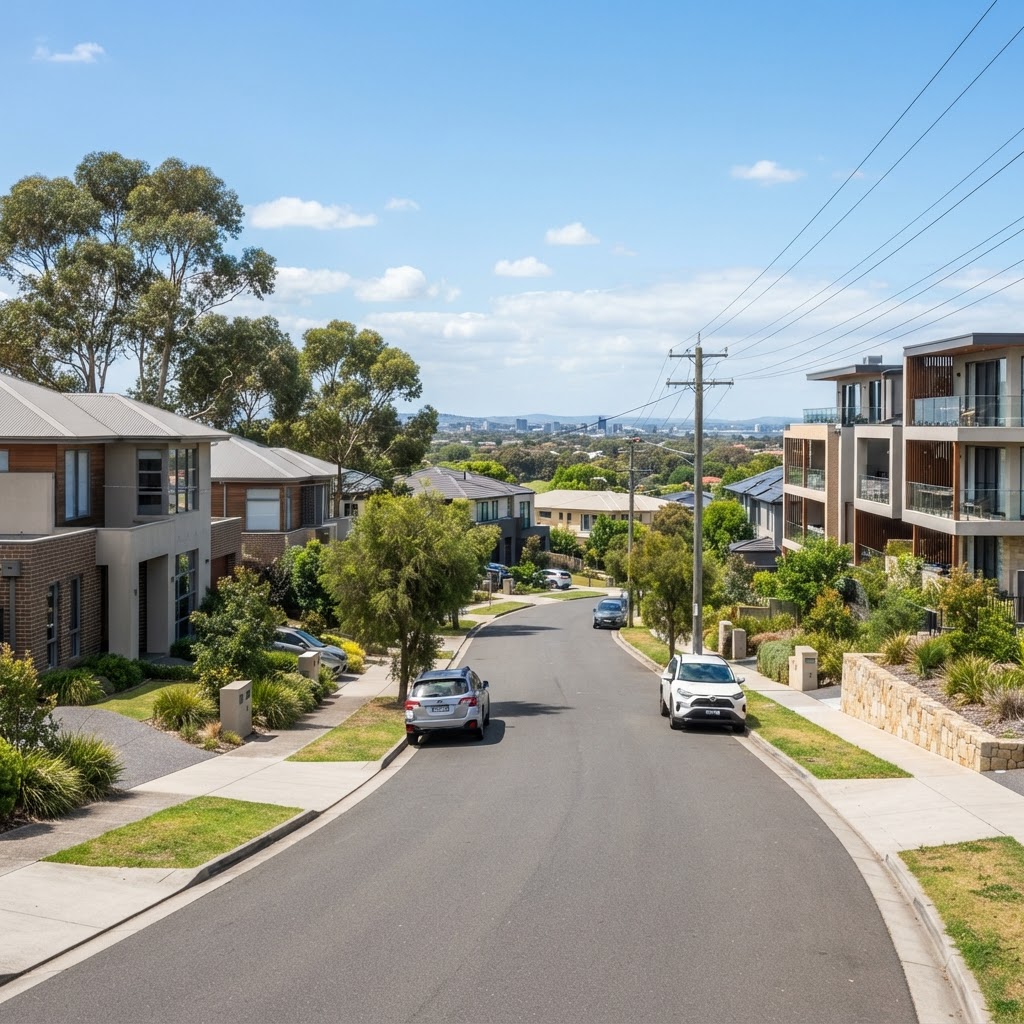
A planning application for a five-storey residential complex on Pakington Street in Newtown drew more than 80 formal objections to Greater Geelong City Council this year, making it one of the most contested single proposals in the municipality's recent planning history. The project, like dozens of others lodged across the city in the past 18 months, sits at the centre of a debate that has grown louder as Geelong's population pushes toward 300,000 and housing supply struggles to keep pace with demand.
The timing matters. Victoria's median house price sits around $680,000, and Geelong broadly mirrors that benchmark, meaning entry-level buyers and renters are being squeezed harder than at any point in the past decade. At the same time, state government planning reforms introduced under Plan for Victoria, the strategic framework released in late 2024, are pushing councils to absorb significantly more density, particularly along established activity corridors and near train stations. Geelong Central and South Geelong stations are both identified under that framework as priority precincts for housing growth.
That policy pressure is arriving in suburbs where long-established communities have very specific ideas about what their streets should look like. Newtown, Belmont and East Geelong have all seen organised resident groups attend council meetings in force during 2025 and into 2026, armed with petitions and heritage arguments. The Geelong Heritage Trust, which advises on matters affecting the city's Victorian-era building stock, has been cited repeatedly in objections to taller developments on streets where interwar bungalows and Edwardian terraces define the streetscape.
What Opponents Are Actually Arguing
The objections are rarely as simple as "not in my backyard." Residents near a proposed 48-unit build-to-rent project on the edge of the Pakington Street precinct have raised concerns about traffic loading on residential laneways, inadequate car parking ratios, and the capacity of existing stormwater infrastructure to handle increased hard-surface runoff. These are planning-system arguments, not just aesthetic ones, and they carry weight in VCAT proceedings. The Victorian Civil and Administrative Tribunal upheld several objector grounds in a 2025 decision involving a Highton development after finding the traffic assessment submitted with the application was based on outdated intersection data.
In Armstrong Creek, where the growth corridor has added thousands of dwellings since the Urban Growth Zone was gazetted, the opposition has a different texture. Residents in established estates along Boundary Road have objected to density variations in newer stages, arguing that parks, schools and the Grovedale Road road network promised in the original Armstrong Creek Town Centre masterplan have not been delivered at the rate the population has grown. The Armstrong Creek Community Association has been vocal at council forums on this point throughout 2025.
The Case for Building Anyway
Planners and housing advocates counter that the cost of not building is already being paid, by renters, by young buyers, and by the service workers and teachers who can no longer afford to live in the city where they work. Geelong's rental vacancy rate has remained below two per cent for most of the past three years, a figure that housing economists generally regard as a crisis threshold for affordability. The Regional Housing Statement released by the state government in 2023 flagged Geelong specifically as a regional centre where undersupply was acute.
Infill development along the Pakington Street and Moorabool Street corridors is, according to the council's own Geelong Sustainable Growth Strategy, the preferred model for accommodating growth without further extending the urban fringe into farmland south of the city. Concentrated density near existing shops, tram routes and services is cheaper to service with infrastructure than greenfield sprawl, a point the council's planning department has made repeatedly in its officer reports to councillors this year.
The practical reality for anyone watching a contested application is that the process rarely ends quickly. VCAT mediation, redesign requests and heritage referrals can extend a decision timeline by 12 to 18 months. Objectors who want their concerns heard should lodge formal submissions with Greater Geelong City Council within the statutory notice period, typically 14 days from public notice, and retain copies of all correspondence. Developers, meanwhile, are increasingly engaging community consultation firms before lodging applications, a step that does not guarantee approval but has demonstrably reduced formal objection rates on several recent Belmont and Grovedale projects.
This article is general information only and is not personal financial or investment advice. Consider your own circumstances and seek licensed professional advice before making financial decisions.