property
Geelong Council's Planning Overhaul Sets New Rules on Height, Density and Design
Proposed amendments to Geelong's planning scheme could reshape how medium-density housing is built across the inner suburbs and growth corridors for years to come.
How we reported this
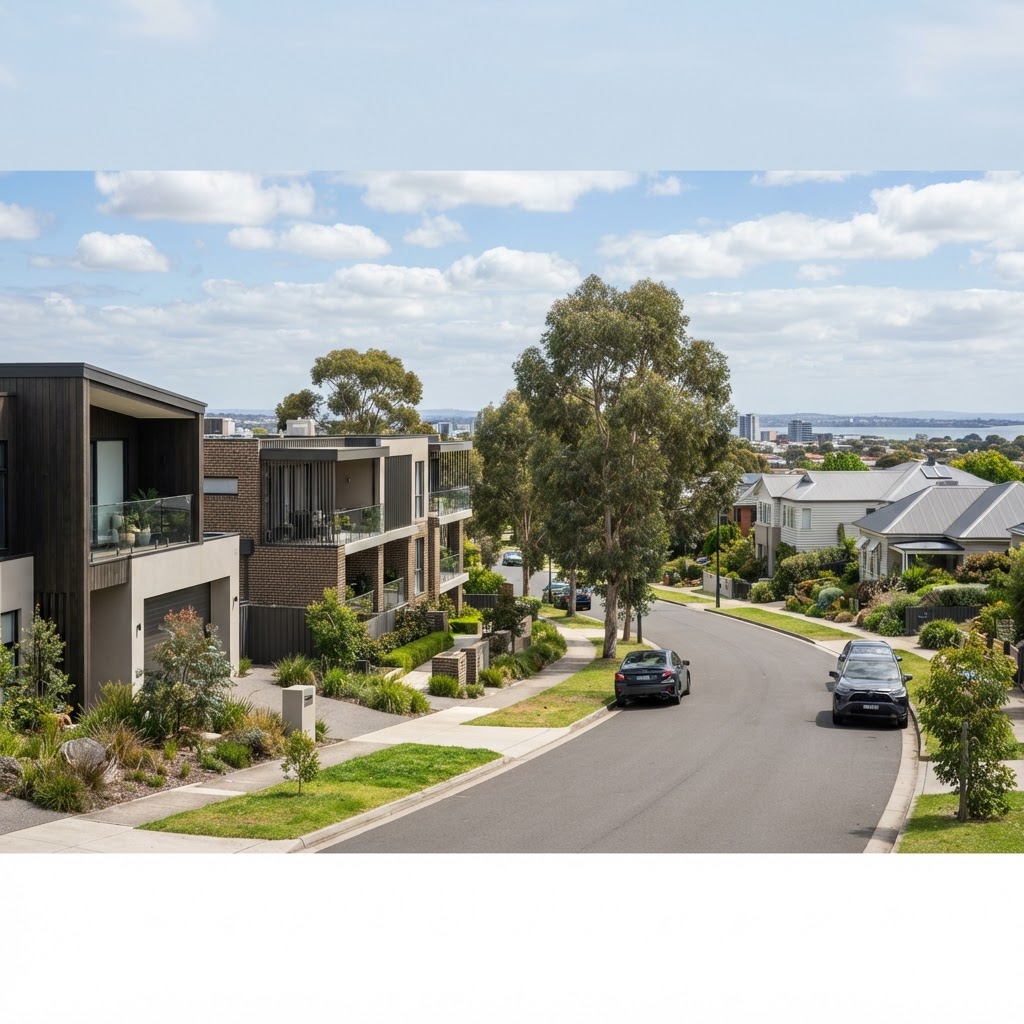
The City of Greater Geelong is advancing amendments to its local planning scheme that would tighten design standards and expand the areas where medium-density housing is permitted, a shift with direct consequences for developers, homeowners and buyers watching the region's fast-moving property market.
The timing matters. Victoria's statewide housing targets, locked in under the Allan government's housing statement from late 2023, require Greater Geelong to absorb significant new dwelling growth over the coming decade. The council is now working to translate that state-level pressure into local controls that don't simply wave through bulk development, but set enforceable benchmarks on setbacks, landscaping, building materials and street activation.
Armstrong Creek and the Inner Ring in the Frame
Two distinct zones are drawing the most attention from planners and agents alike. Armstrong Creek, already home to one of Victoria's largest greenfield urban growth corridors, is subject to proposed structure plan updates that would permit higher residential densities closer to the town centre spine along Surf Coast Highway. Under the draft changes, land within 400 metres of designated activity nodes could accommodate three-storey attached dwellings where only two storeys were previously standard.
Meanwhile, inner Geelong suburbs including Newtown, Manifold Heights and South Geelong are flagged for what planners call a 'gentle density' overlay. The overlay would allow dual occupancies and small apartment buildings of up to four dwellings on lots currently zoned for single houses, provided they meet updated design guidelines covering things like facade articulation, private open space minimums and tree canopy retention. Pakington Street, Newtown's main commercial strip, sits at the edge of one proposed boundary, meaning corner lots and rear laneways in that precinct could soon be assessed under a different set of rules than they were six months ago.
The Geelong Authority, the state government body established to oversee strategic planning for the region, has been working alongside council officers on the framework, which was presented to the council's planning committee for consideration earlier this year.
What the Market Is Already Pricing In
Property professionals operating in the corridor between the Geelong CBD and Torquay have noticed the effect of planning uncertainty on land values. Vacant lots in Charlemont and Armstrong, two suburbs within the growth corridor, have been trading at a premium where dual-occupancy or townhouse potential is perceived to be lower-risk under the existing scheme. Victoria's median house price sits at approximately $680,000, but established homes in Newtown regularly transact above $900,000, meaning the financial case for subdividing or developing is compelling for landowners who can navigate the approvals process.
Builders and developers active in the region have noted that design quality requirements, if strengthened, will add cost to projects. A four-unit townhouse development in South Geelong currently costs meaningfully more to build than an equivalent project two years ago, with construction input costs remaining elevated. Whether tighter design rules accelerate that cost pressure or ultimately improve the resale values that offset it is a genuine commercial question for anyone planning a project in the next 18 months.
The council is expected to place the proposed amendments on formal public exhibition in the coming weeks, triggering a statutory consultation period during which landowners, developers and community members can lodge submissions. That process typically runs for a minimum of 30 days under the Planning and Environment Act 1987, after which a planning panel may be convened if objections are received.
For buyers already active in Newtown, Manifold Heights or the Armstrong Creek precinct, the practical advice from planning lawyers and buyers' agents is consistent: check the current zoning and any overlay controls on a property before exchange, and ask your conveyancer to search for any planning scheme amendment that has been exhibited but not yet gazetted. An amendment in exhibition has no legal force yet, but it signals exactly where council policy is heading, and that can matter enormously when you're deciding how to use a block you just paid seven figures for.
This article is general information only and is not personal financial or investment advice. Consider your own circumstances and seek licensed professional advice before making financial decisions.