property
Planning Decisions Are Reshaping Geelong's Property Map, And Buyers Are Paying Attention
From Armstrong Creek's expanding urban growth boundary to contested rezoning fights in Highton and Belmont, planning policy is now one of the biggest forces moving Geelong house prices.
How we reported this
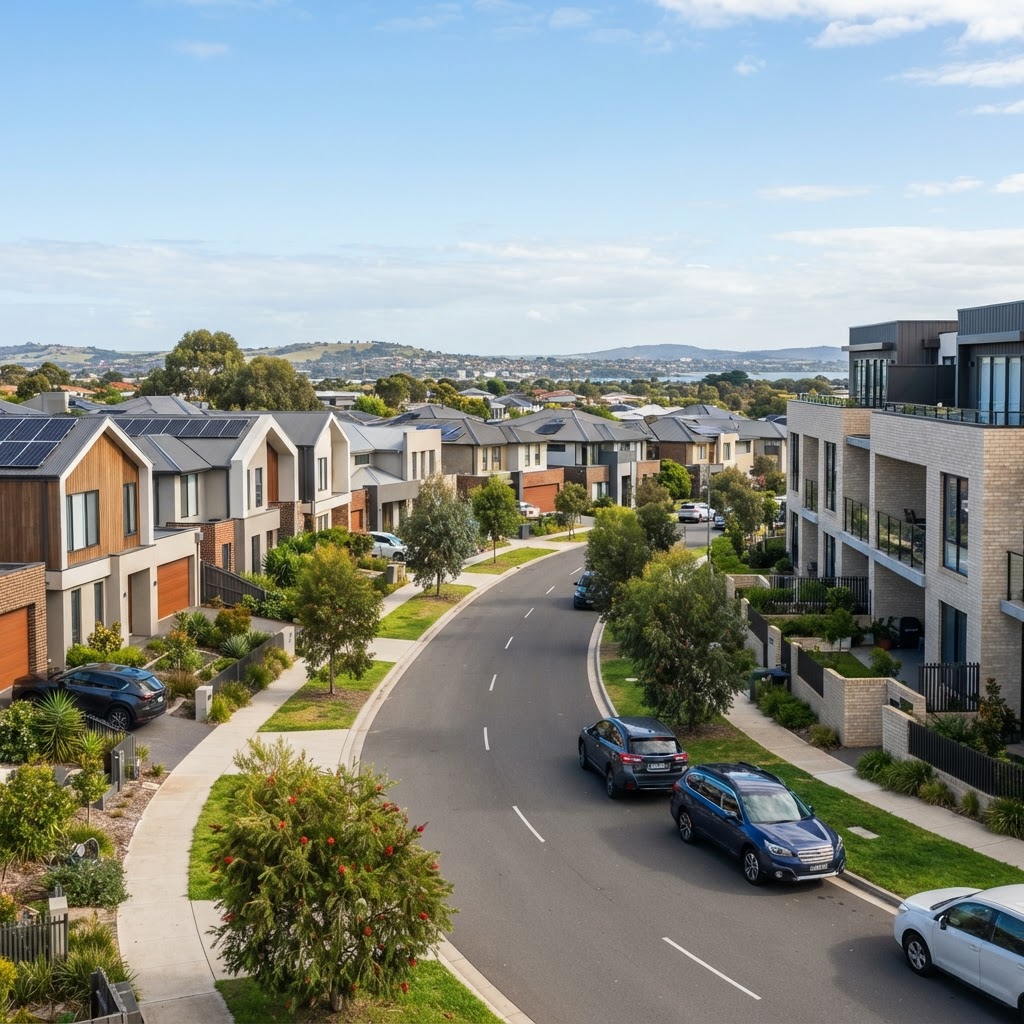
A cluster of planning decisions handed down in the past six months is quietly reordering Geelong's property market, redirecting buyer demand toward corridors earmarked for infrastructure and raising fresh questions about affordability in established suburbs where residents are pushing back against density targets.
The timing matters. Victoria's statewide median sits around $680,000, but Geelong has been holding a notable discount to Melbourne, a gap that makes the city attractive to first-home buyers and upsizers priced out of the northern and eastern suburbs. That discount is narrowing, and planning approvals are a significant reason why.
Armstrong Creek Is Still the Engine Room
The Armstrong Creek Urban Growth Area remains the single largest planned residential expansion in the Greater Geelong municipality. The precinct, stretching south from Grovedale toward the Surf Coast Highway, has added thousands of lots over the past decade and continues to absorb the bulk of the region's new dwelling approvals. The City of Greater Geelong approved multiple medium-density applications along Boundary Road and the Warralily estate corridor in early 2026, accelerating supply that developers and buyers have been waiting on since infrastructure levies were revised late last year.
House-and-land packages in Armstrong Creek have been tracking between $580,000 and $720,000 for a four-bedroom product, a price point that directly competes with established homes in suburbs like Belmont and Highton, where a family home on a standard block now regularly asks above $850,000. A Highton property with a full-size basketball court was recently listed at circa $2 million, signalling that the top end of the suburb's market has moved well beyond what many upgraders expected even three years ago.
The pressure on established suburbs is not purely organic. The Victorian Government's housing targets, which assign Greater Geelong a mandatory dwelling quota as part of the state's Plan for Victoria framework, have forced the council to assess rezoning applications it might previously have deferred. Several residential streets in Belmont's older grid, particularly around the Thomson Road and High Street precinct, are now subject to neighbourhood character overlays that are being tested against developer applications for three and four-storey apartment buildings.
Rezoning Battles and What They Mean for Values
Not every planning move pushes prices up. In suburbs where higher-density zoning is proposed but not yet confirmed, uncertainty is showing up in the market. Properties in transitional zones, the planning term for land under active rezoning review, are taking longer to sell, and vendors are finding that buyers discount their offers until zoning is resolved. Real estate agents working the Geelong East and Newcomb corridors have noted this pattern in recent months, though the city's overall clearance rates remain above the Melbourne average, which recorded its worst start to winter in recent memory this July.
The Surf Coast Shire, which borders Greater Geelong to the south, is separately navigating its own constraints. Torquay and Jan Juc face a different kind of planning pressure: environmental overlays and coastal hazard buffers are limiting new supply while demand from lifestyle buyers, many still working remotely, keeps competition high. The median in Torquay has moved above $1.1 million, according to recent market data, creating a pronounced price cliff between coastal and inland Geelong postcodes.
For buyers trying to read the market, the practical takeaway is straightforward: check the planning overlay before you make an offer. A property zoned Neighbourhood Residential in Highton carries different development ceiling, and therefore different long-term value assumptions, than one in a General Residential or Residential Growth zone two streets away. The City of Greater Geelong's online mapping tool, CoGG Maps, allows anyone to check overlays and zone classifications before signing a contract.
The next significant decision point for the Geelong market comes in September 2026, when Greater Geelong is expected to finalise its Housing Strategy review, a document that will set density expectations suburb by suburb for the next decade. Buyers, investors, and residents fighting infill development in places like Newtown and Manifold Heights are all watching that process closely, because whatever it decides will have real consequences for land values on either side of every zoning line in the city.
This article is general information only and is not personal financial or investment advice. Consider your own circumstances and seek licensed professional advice before making financial decisions.