property
Rezoning Push Could Reshape Norlane's Housing Future
A proposed planning scheme amendment targeting industrial-zoned land along Princes Highway in Norlane has put one of Geelong's most affordable suburbs at the centre of a development debate.
How we reported this
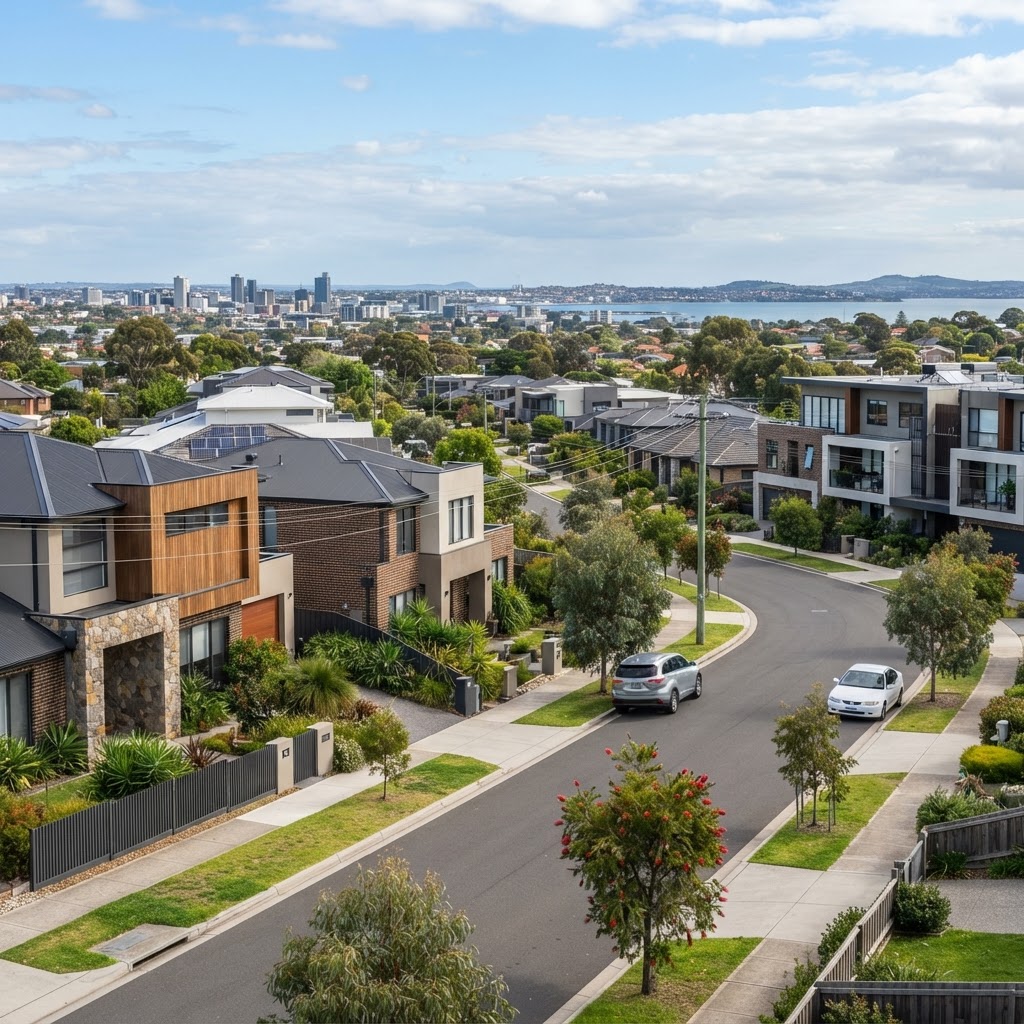
A planning scheme amendment before the City of Greater Geelong would convert roughly 18 hectares of underutilised industrial land along Princes Highway in Norlane from Industrial 1 Zone to a mix of General Residential and Commercial 1 zoning, a change that, if approved, could deliver hundreds of new dwellings to a suburb that has long sat on the margins of the region's property boom.
The timing matters. Greater Geelong is forecast to absorb more than 130,000 additional residents by 2051 under the state government's Victoria in Future projections, and councils across the region are under increasing pressure from the Department of Transport and Planning to identify infill opportunities close to existing services rather than simply extending greenfield frontiers further south toward Armstrong Creek.
Why Norlane, and Why Now
Norlane occupies a strategic but overlooked position. It sits roughly four kilometres north of Geelong's CBD, abuts Corio Bay, and has direct access to the Geelong Ring Road interchange. The suburb's median house price sits well below the broader Geelong median of approximately $680,000, making it one of the few remaining pockets where first-home buyers and investors can still enter the market under $550,000. That affordability gap, combined with proximity to the North Shore employment corridor and the Avalon Airport growth precinct, has drawn attention from mid-tier developers who have been quietly optioning sites along Princes Highway for the past 18 months.
The amendment, which is expected to be formally exhibited through the City of Greater Geelong planning portal later this year, has been shaped in part by the council's Norlane and Corio Structure Plan, a long-range document that identified the highway-fronting industrial strip as a transitional zone suitable for higher-density residential and mixed-use activation. The structure plan specifically flagged the stretch between Separation Street and Limeburners Road as a priority area, noting that several factory and warehousing sites there have sat idle or at low utilisation since the closure of Ford's Norlane operations in 2016.
Armstrong Creek's success story is relevant here. That greenfield corridor, developed largely through Precinct Structure Plans endorsed by the Victorian Planning Authority from around 2013 onwards, has delivered more than 15,000 new lots over a decade but now faces the classic late-stage pressures of any fringe estate: longer commutes, rising land prices, and infrastructure that is still playing catch-up. Planners and community housing advocates alike have pointed to established suburbs like Norlane as the logical next chapter, places where sewer, road, and school capacity already exists.
What the Amendment Could Mean on the Ground
Under a General Residential Zone, landowners can typically pursue townhouse or apartment developments of two to four storeys without triggering the more onerous assessment processes that apply to activity centres. For a suburb where the dominant dwelling type is still the detached post-war fibro or brick veneer home, that represents a significant shift in density expectations. Several properties on the affected corridor are held on lots of 2,000 square metres or more, large enough, planners note, to support 10 to 20 dwellings each under standard ResCode provisions.
Community consultation is the next gate. The City of Greater Geelong is required under the Planning and Environment Act 1987 to give the amendment public exhibition, during which residents, businesses, and other stakeholders can lodge formal submissions. If the council resolves to adopt the amendment after exhibition, it goes to the Minister for Planning for approval. That process typically takes between 12 and 24 months from formal exhibition, meaning any shovels in the ground are unlikely before late 2027 at the earliest.
For homeowners already in Norlane, the practical advice is straightforward: watch the exhibition period closely, attend any information sessions hosted at the Corio Community Hub or Northern Bay College precinct, and engage directly with council planners if a property sits within or adjacent to the affected zone. Rezoning decisions tend to move faster once they gain political momentum, and in a regional city watching its southern suburbs absorb most of the growth conversation, the north is overdue for a hard look.
This article is general information only and is not personal financial or investment advice. Consider your own circumstances and seek licensed professional advice before making financial decisions.