property
Geelong's Newest Apartment Tower: What It Means for the Local Market
A proposed high-rise development near the Geelong CBD waterfront is forcing buyers, renters and investors to rethink what urban living looks like in a city that has long traded on its quarter-acre block identity.
How we reported this
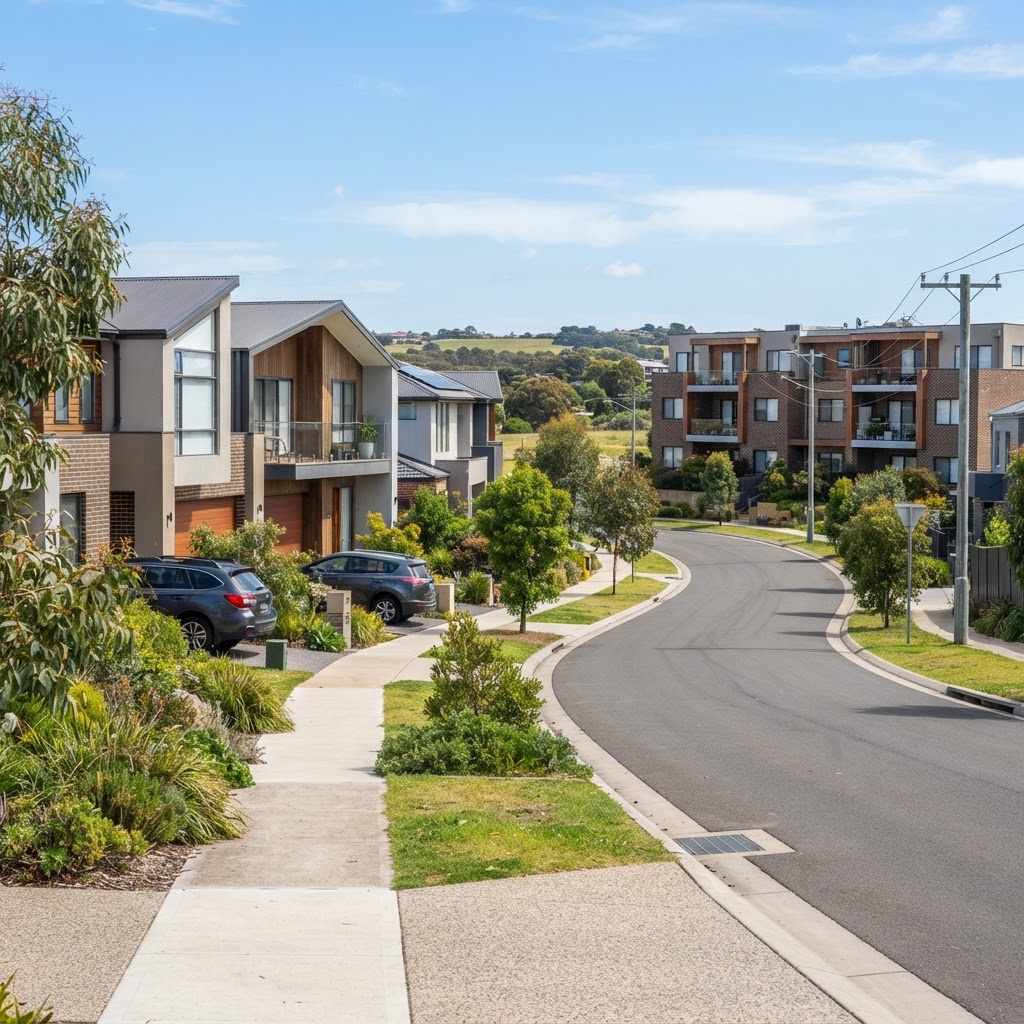
A multi-storey apartment tower proposal lodged with the City of Greater Geelong is shaping up as one of the more consequential planning decisions the municipality will make this decade. The application, targeting a site within walking distance of Cunningham Pier and the revitalised Waterfront precinct, calls for more than 100 dwellings across 15 or more levels, a scale that would make it among the tallest residential buildings the city has approved outside its limited CBD core.
The timing is not accidental. Melbourne's auction market has stumbled into its worst winter start on record, according to recent industry data, and regional cities like Geelong are absorbing a fresh wave of buyers who have quietly given up on the inner suburbs. With a Victorian median house price sitting around $680,000, Geelong's relative affordability continues to pull people 75 kilometres down the Princes Freeway. The question is whether the city's planning framework can keep pace with that demand, or whether it will keep squeezing supply until even the commuter belt stops looking like a bargain.
Why This Site, Why Now
The waterfront corridor between Steampacket Gardens and the Geelong Railway Station has been earmarked for increased density in successive iterations of the Geelong City Deal, the federal-state investment program that has already channelled hundreds of millions of dollars into the region since its 2016 signing. The logic is straightforward: public transport infrastructure already exists, the Geelong Railway Station handles thousands of weekday commuters, and the foreshore amenity makes vertical living far more palatable to buyers who might otherwise demand a backyard in Highton or Armstrong Creek.
Armstrong Creek itself is worth watching for contrast. The growth corridor south of the city has delivered thousands of conventional house-and-land packages over the past decade, and the Urban Growth Zone there continues to attract volume builders. But Armstrong Creek is car-dependent, still waiting on promised community infrastructure, and increasingly stretched for families who discover the commute to Geelong's health and education precincts, think Barwon Health's University Hospital and Deakin University's Waurn Ponds campus, is longer than the marketing brochures suggested. A well-located inner-city tower offers a fundamentally different proposition.
What the Numbers Say, and What Investors Are Watching
Apartment supply in Geelong's central suburbs has historically been thin. Listings data consistently shows units and apartments representing a much smaller share of total stock here than in comparable regional cities, which has kept vacancy rates low and gross rental yields for inner-Geelong units competitive relative to Melbourne benchmarks. That dynamic is exactly what draws institutional and private investors to a project of this scale.
For owner-occupiers, the calculus is different. A one- or two-bedroom apartment in the CBD precinct currently trades in a range that can look attractive against a detached home in Newtown or Belmont, where entry-level houses regularly clear $700,000 to $800,000 at auction. If the new tower comes to market at competitive price points, and developers under planning conditions that include affordable housing contributions will face pressure to keep some stock accessible, it could open a genuine pathway for Gen Z buyers who want a foothold in Geelong but cannot stretch to a detached home.
The City of Greater Geelong's planning panel will scrutinise height, setbacks, wind modelling and car parking ratios before any permit issues. Heritage advocates have flagged concerns about sightlines along Moorabool Street, one of the city's heritage-listed commercial spines, and those objections will need to be formally addressed in the planning process. Neighbouring property owners within the statutory notification radius have until late July to lodge submissions.
For buyers sitting on the fence, the practical advice is to watch the permit outcome closely rather than act on speculation. If the tower is approved broadly in its current form, comparable sites nearby will attract developer interest quickly and land values in the immediate precinct are likely to firm. Renters in the CBD who are weighing up a purchase should factor in that new apartment supply, if it arrives, typically softens rents in the short term before the market absorbs it. Either way, this application is a signal that Geelong's inner-city market is entering a different chapter.
This article is general information only and is not personal financial or investment advice. Consider your own circumstances and seek licensed professional advice before making financial decisions.