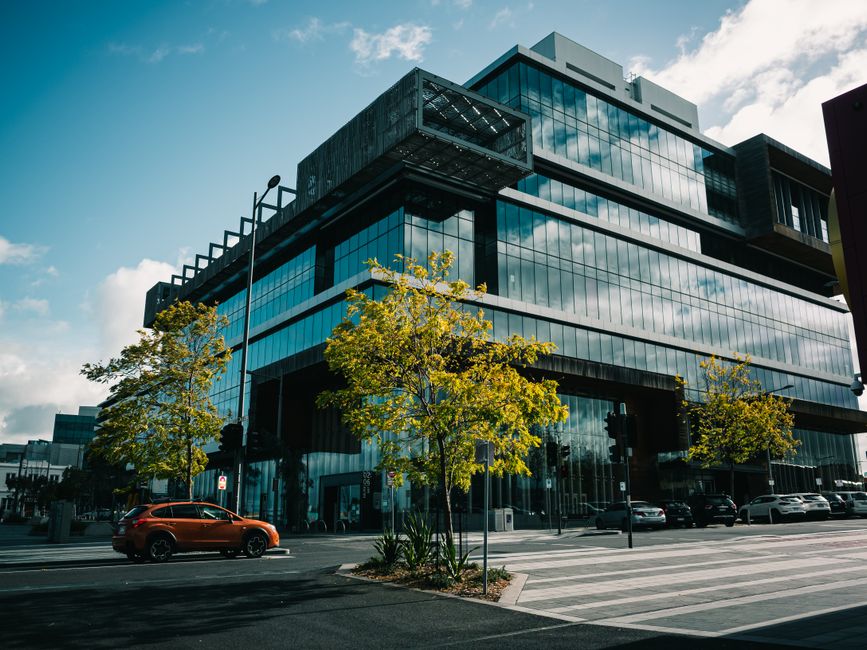
Geelong's commercial property market is experiencing a significant inflection point, with institutional investors and local developers moving decisively into premium office precincts as demand patterns shift across the city's traditional and emerging business districts.
The trend is particularly evident along the Gheringhap Street corridor and in the revitalised Waterfront precinct, where modern Grade A office space is commanding rents previously reserved for Melbourne's fringe suburbs. Recent market data suggests premium office yields in these locations have tightened to 5.2–5.6%, down from 6.1% just 18 months ago, signalling renewed investor confidence and structural demand growth.
Several factors are converging to create this opportunity. First, multinational corporations relocating operations from Melbourne CBD are discovering Geelong's combination of lower occupancy costs, proximity to Victoria's manufacturing heartland, and improved digital infrastructure. Second, the completion of major transport infrastructure projects has reduced commute friction, making Geelong an attractive satellite office hub for firms seeking decentralisation strategies.
Early movers are already benefiting. Several institutional property groups have quietly accumulated strategic holdings in the Gheringhap precinct over the past 12 months, positioning for the anticipated wave of corporate leasing activity. One boutique Geelong-based developer has secured three significant office development sites around the CBD's eastern edge, with preliminary plans for mixed-use projects targeting the professional services and fintech sectors.
The technology sector is proving particularly bullish. Several software and digital services companies have established regional hubs in refurbished Victorian warehouses near the Waterfront, attracted by heritage character, lower fit-out costs compared to new-build office, and the lifestyle appeal that increasingly factors into talent retention decisions.
Supply remains constrained. Available Grade A office inventory sits at approximately 2.3%, well below the 4.5% considered a balanced market. This scarcity is underpinning rental growth—expectations point to 3–4% annual increases over the next three years, outpacing Melbourne's projected 2.1%.
However, challenges persist. Geelong's office market remains thin compared to major metros, meaning liquidity can evaporate quickly during downturns. Additionally, the city's reliance on manufacturing and automotive sectors introduces cyclical risk—any significant economic contraction could dampen corporate expansion plans.
For investors, timing matters. The window for acquiring well-positioned assets at historically attractive yields is narrowing. By late 2026, rental growth absorption and increased competition among buyers will likely compress returns. Those who have already positioned capital in the Gheringhap and Waterfront corridors—and those prepared to move quickly in the coming months—stand to capture disproportionate value as Geelong solidifies its status as Victoria's leading secondary office market.
This article was compiled by AI from the sources linked above and screened before publishing. See our editorial standards.
Spread the word
Have your say
About this article
Published by The Daily Geelong
Daily brief
Enjoyed this? Wake up to Geelong news every morning.
Free, in your inbox before 7am. Weekdays.