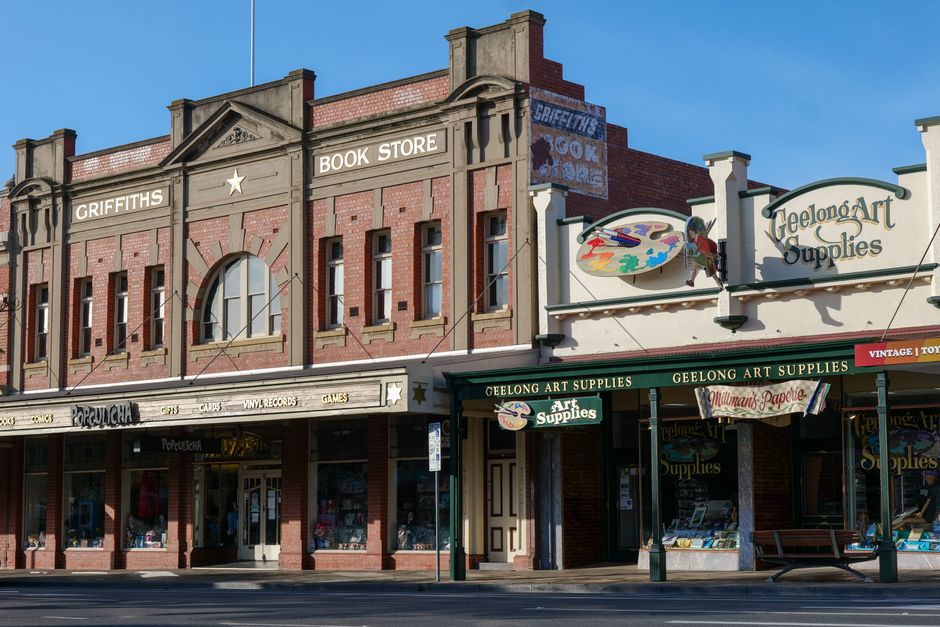
Geelong's property market is quietly outperforming expectations, with median house prices holding steady around $500,000 despite economic headwinds that have rattled capitals across the country. For a region once dismissed as a satellite city, the data tells a compelling story: affordability remains king, and savvy buyers are taking notice.
The latest market analysis shows Geelong's median sits comfortably $180,000 below Melbourne's $680,000 benchmark—a gap that's proving magnetic for first-home buyers and downsizers alike. Established suburbs like Bellerine, Newtown, and Manifold Heights continue to attract solid demand, with character-filled homes on generous lots appealing to buyers seeking space without the sprawl premium.
"We're seeing genuine interest from Melbourne commuters who've reassessed their priorities," explains one local agent. "The combination of reasonable prices, quality schools, and the Surf Coast lifestyle has real appeal when you factor in a 70-minute commute versus being locked into $800,000-plus mortgages closer to the CBD."
The real momentum, however, is concentrating in Armstrong Creek—the region's transformational growth corridor on Geelong's western fringe. New estate releases have attracted attention from both investors and families, with townhouses and four-bedroom homes finding buyers in the $550,000 to $650,000 range. The development's master-planned infrastructure, including schools and retail precincts, is reshaping buyer calculus for the wider region.
Price resilience in Geelong appears tethered to three factors working in tandem. First, the region's affordability relative to Melbourne creates a natural ceiling effect—prices haven't inflated to unsustainable levels that require dramatic corrections. Second, infrastructure investment—including the upcoming Geelong Fast Rail project—continues to strengthen the area's fundamentals as a regional hub. Third, tourism and lifestyle appeal around the Bellarine Peninsula sustains investor interest in holiday rental properties.
It's worth noting that not all precincts are moving uniformly. Beachfront properties along the foreshore remain premium-priced and competitive, while outer suburbs like Lara and Corio are experiencing steadier, modest growth patterns typical of transitional neighbourhoods.
For now, Geelong's relative stability offers a counterpoint to the volatility rippling through eastern seaboard capitals. Whether that advantage persists may depend on how aggressively the RBA moves in coming months—but for buyers seeking value without sacrificing lifestyle, the region's equation remains decidedly attractive.
This article was compiled by AI and screened before publishing. See our editorial standards.
Spread the word
Have your say
Sources
About this article
Published by The Daily Geelong
Daily brief
Enjoyed this? Wake up to Geelong news every morning.
Free, in your inbox before 7am. Weekdays.