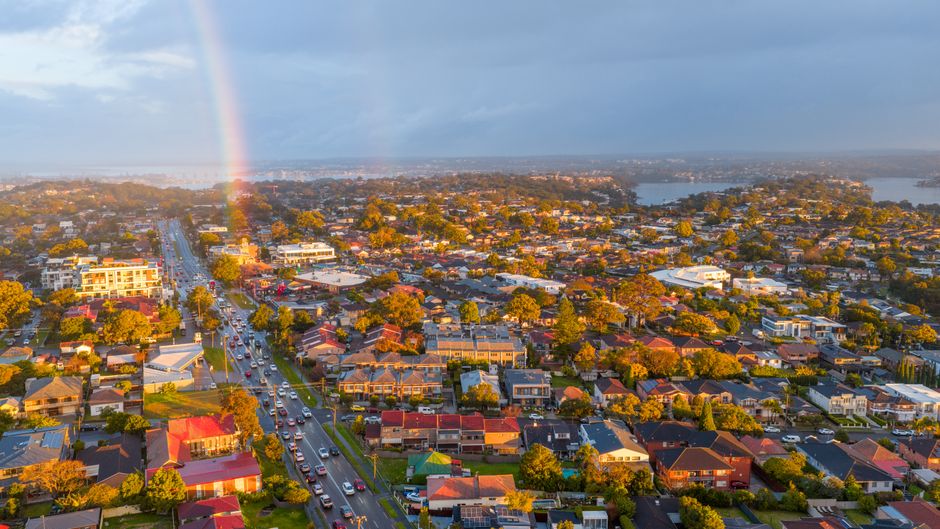
What makes a suburb great in Geelong in 2026 is a combination of factors that different residents weight differently depending on their life stage, values and priorities. For families, school zone quality and access to parks, playgrounds and sporting facilities weigh heavily in the decision. For young professionals, proximity to the CBD, cafe culture, walkability and access to public transport or major road corridors matter most. For retirees and downsizers, quieter residential character, access to healthcare, community facilities and manageable housing options are the key considerations. For first home buyers, affordability and the trajectory of capital growth sit at the top of the assessment criteria. Geelong has suburbs that excel across all of these categories, and understanding which neighbourhood aligns with your priorities can make a significant difference to long-term satisfaction with a property decision.
For families, Newtown consistently ranks as Geelong's most sought-after suburb, offering access to elite private schools including The Geelong College and Geelong Grammar School's Toorak Campus, quality state primary schools in Newtown Primary and Manifold Heights Primary, and an established tree-lined suburb with significant housing stock from the Federation and inter-war eras. Median house prices in Newtown sit around $1.05 million to $1.15 million, reflecting its premium status. Belmont is arguably Geelong's best mid-market family suburb, with the Barwon River on its doorstep, strong state and Catholic school options, easy freeway access and median house prices of approximately $680,000 to $720,000. For young professionals seeking the best combination of walkability and cafe culture, Geelong West and its Pakington Street spine is the default destination, offering Victorian-era cottages and updated townhouses at median prices of $750,000 to $850,000 within easy reach of the CBD and a vibrant independent food, coffee and retail scene.
Retirees and downsizers in Geelong are increasingly attracted to South Geelong and Rippleside, two inner suburbs that offer the lifestyle of Geelong's waterfront precinct without the premium of the CBD itself. Rippleside Park and the Esplanade foreshore provide daily walking infrastructure, and the compact housing stock of predominantly updated cottages and newer apartments caters well to downsizers seeking low maintenance living. Median prices in this corridor sit at $750,000 to $900,000 for houses and $450,000 to $580,000 for apartments, representing strong lifestyle value. For retirees who prioritise quiet suburban character and access to healthcare, Highton offers proximity to University Hospital Geelong and the Waurn Ponds shopping and medical precinct, good community sporting clubs and a settled residential atmosphere at median house prices of approximately $730,000 to $780,000. First home buyers seeking affordable entry points should be focused on Corio and Norlane in the north, where three-bedroom houses are still transacting in the $400,000 to $480,000 range, and on Thomson and Hamlyn Heights on Geelong's western fringe where slightly older homes offer reasonable condition and good access to the CBD for $500,000 to $620,000.
The one suburb to watch in Geelong in 2026 for early movers is North Geelong. The former Ford manufacturing site is transforming into the Pivot City Innovation District, a state government-backed precinct designed to attract knowledge economy businesses, technology enterprises and creative industries to anchor a new economic identity for Geelong's northern industrial corridor. North Geelong currently has median house prices of approximately $560,000 to $620,000 for established homes, representing a genuine discount to comparable properties in Belmont or Newtown. As the Pivot City precinct progressively attracts businesses and a professional workforce over the next five to eight years, the residential profile of North Geelong, Bell Park and Bell Post Hill is expected to transform. Early buyers who can see through the current industrial character of parts of the northern corridor to the future mixed-use knowledge economy neighbourhood it is becoming are positioning for above-market capital growth. The suburb already benefits from good proximity to GMHBA Stadium, Corio Bay, the Geelong CBD and the Princes Highway, meaning its fundamentals are sound independent of the Pivot City uplift story.
This article was compiled by AI from the sources linked above and screened before publishing. See our editorial standards.
Spread the word
Have your say
About this article
Published by The Daily Geelong
Daily brief
Enjoyed this? Wake up to Geelong news every morning.
Free, in your inbox before 7am. Weekdays.