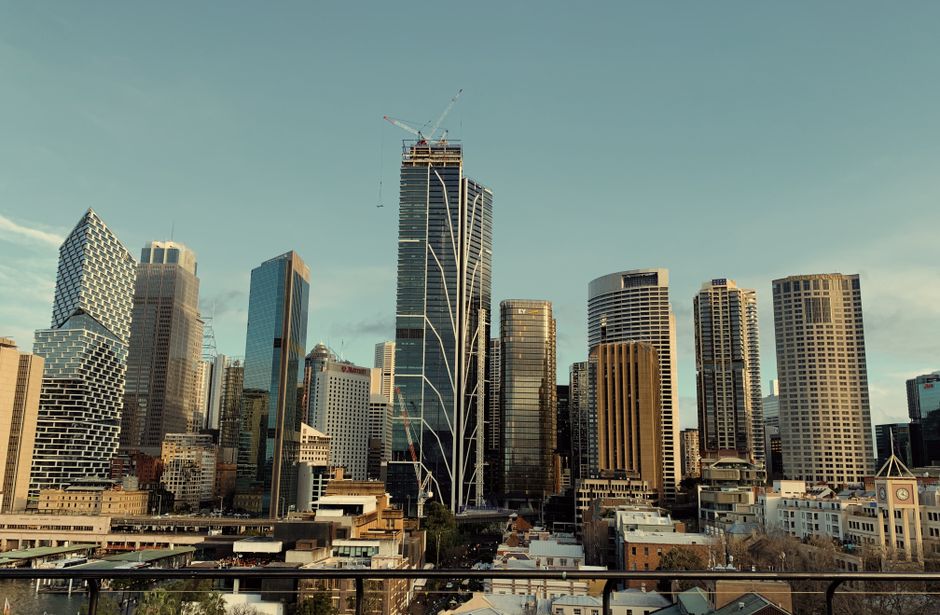
When Geelong's manufacturing sector began its significant contraction in the early 2010s, few predicted that the city's industrial decline would become the catalyst for one of Victoria's most ambitious sustainability transformations. Today, as the city hosts the nation's largest renewable energy precinct and ranks among Australia's top five sustainable cities, it's worth examining how we arrived at this inflection point.
The turning point came around 2016, when local environmental groups operating from community hubs across Kardinia and South Geelong began documenting the cumulative health impacts of decades of heavy industry along the Barwon riverfront. Concurrent research from Deakin University highlighted that the city's air quality had become progressively worse through the 1990s and 2000s, with particulate matter concentrations regularly exceeding national standards during summer months. These findings prompted the Greater Geelong City Council to commission a comprehensive sustainability audit in 2017.
The 2018 State Government announcement that the Latrobe Valley would transition away from coal power generation created unexpected momentum. Geelong, geographically positioned between Melbourne and the Latrobe region, positioned itself as a natural hub for renewable manufacturing and clean energy development. The Victorian Renewable Energy Zones Framework, unveiled in 2020, explicitly identified the Geelong Manufacturing Precinct as a priority investment area. By 2022, three major solar component manufacturers had relocated operations to the city's eastern industrial corridor, creating roughly 1,200 jobs.
Community organisations proved essential to this shift. The Geelong Environment Council, operating from its Bellerine Street office since 2008, had spent over a decade advocating for cleaner air standards and sustainable urban planning. Their persistent engagement with local councillors—particularly regarding green space allocation in densifying suburbs like Manifold Heights and Newtown—influenced the 2019 Urban Forest Strategy, which committed to planting 50,000 additional trees across the municipality by 2030.
Corporate accountability also played a role. Major employers in the Geelong area faced mounting pressure from both workforce recruitment challenges and investor expectations regarding environmental responsibility. Several announced carbon-neutral commitments between 2019 and 2022, driving infrastructure upgrades that inadvertently benefited broader sustainability outcomes.
By 2024, renewable energy generation on Geelong's industrial estates exceeded local demand for the first time. The transition wasn't painless—unemployment spiked temporarily as traditional industries contracted—but the diversification strategy appears to be taking hold. Today's initiatives in circular economy manufacturing and water security across suburbs from Belmont to Torquay represent not a sudden environmental awakening, but rather the culmination of years of grassroots advocacy, strategic policy alignment, and economic necessity colliding in unexpected ways.
This article was compiled by AI from the sources linked above and screened before publishing. See our editorial standards.
Spread the word
Have your say
About this article
Published by The Daily Geelong
Daily brief
Enjoyed this? Wake up to Geelong news every morning.
Free, in your inbox before 7am. Weekdays.