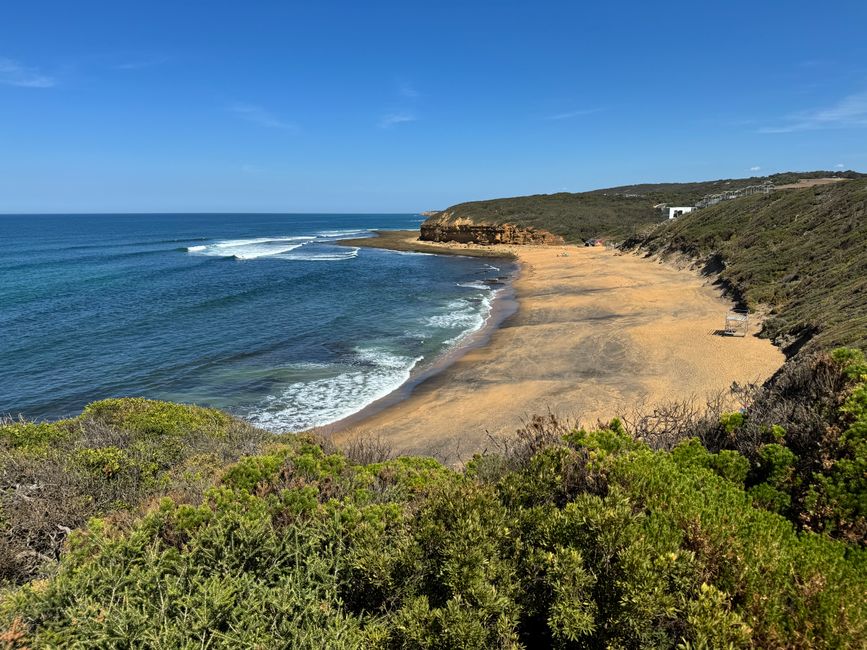
Bells Beach has long been synonymous with world-class waves and holiday getaways, but the suburb is undergoing a quiet revolution that's catching the attention of savvy property investors.
The completion of the Winchelsea bypass and planned upgrades to coastal road networks have fundamentally altered Bells Beach's accessibility equation. Where once the 45-minute commute to Melbourne felt like a weekend commitment, new infrastructure is eroding that friction. For professionals working flexible arrangements or running coastal businesses, the suburb has shifted from destination to genuine option.
The Anderson Reserve upgrade—completed late last year—signals serious community investment. New sports facilities, improved parking, and beachfront pathways have elevated Bells Beach beyond its surfing identity. Families relocating from inner Melbourne or the congested Armstrong Creek corridor are discovering a more affordable alternative with genuine lifestyle credentials.
Current median prices hover around $890,000 for houses—still competitive against Melbourne's $1.05m benchmark—while vacant land in the immediate precinct remains available at $350,000–$480,000 per residential lot. That differential matters when mortgage serviceability is factored across family budgets.
The nearby Torquay employment nodes, particularly around the manufacturing and tourism sectors, provide local work options. The surf industry remains concentrated here, with major brands maintaining operations across Torquay and Bell Street's retail strip.
What's particularly compelling for investors is the supply-demand asymmetry. Unlike Armstrong Creek's rapid rollout, Bells Beach development is constrained by geography and heritage overlays protecting the surfing character. This natural scarcity typically props medium-term values when infrastructure matures.
The Geelong to Winchelsea rail corridor discussions—still preliminary but actively pursued by local councils—represent the long-play opportunity. Should improved public transport eventuate, Bells Beach would transition from commuter novelty to genuine lifestyle-plus-connectivity proposition.
Property research suggests growth suburbs transition through predictable phases: infrastructure completion, population awareness, buyer migration, and finally price convergence. Bells Beach is roughly 18 months into phase one. Early movers in quality family homes or small development-potential parcels stand to capture appreciation as awareness spreads.
The risk calculus remains straightforward: continued transport investment versus stalled council projects. But for investors comfortable with 5–7 year horizons and seeking alternatives to Armstrong Creek's saturation, Bells Beach's combination of infrastructure momentum, natural constraints, and improving accessibility presents genuine opportunity.
The beach will always be here. Now, so will the roads to reach it.
This article was compiled by AI from the sources linked above and screened before publishing. See our editorial standards.
Spread the word
Have your say
About this article
Published by The Daily Geelong
Daily brief
Enjoyed this? Wake up to Geelong news every morning.
Free, in your inbox before 7am. Weekdays.